




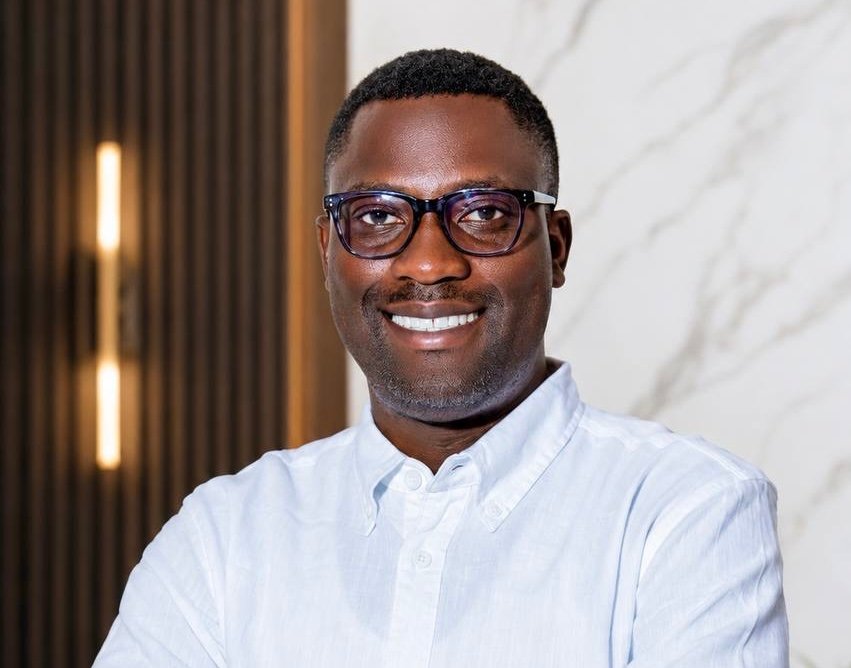
Long before he was known as a CEO, Kwabena Asante Safo was a young boy learning the value of a cedi the hard way. At Kantamanto, Accra’s sprawling and unforgiving trading hub, he learned to count change, read people and, perhaps most importantly, understand the market.
Today, he sits at the helm of a five-business group spanning energy, mobility, construction, food and health. Yet behind the scale of the businesses lies a more interesting question: how did one man build so much, so quickly, while holding firmly to the purpose that shaped him from the beginning?

Foundations: The Making of a Builder
Kwabena Asante Safo was born on 22nd December 1989 in Asante Akyem Agogo in the Ashanti Region. His early education at Apostle Safo School of Arts and Sciences introduced him to the values of discipline, learning and community. He later attended Koforidua SDA Secondary School before pursuing a path that would ultimately define much of his professional life.
At Takoradi Technical University, then known as Takoradi Polytechnic, he studied Building Technology and earned an HND in Building Construction. The training gave him more than technical knowledge. It gave him a practical understanding of how things are designed, assembled and brought to life.
Looking back, it would be easy to draw a neat line from that classroom to the conglomerate he leads today. But his journey was anything but straightforward. Between his early days at Kantamanto and the emergence of KS Group came years of experimentation, setbacks, reinvention and calculated risks. Some ventures worked. Others did not. Each, however, left something behind.
The Ventures Before the Empire
Before KS Electricals, there was Sanyakwa Company.
With his background in construction and an emerging interest in design, Asante Safo ventured into interior decoration and design. Sanyakwa did not become the lasting enterprise that some of his later businesses would, but its lessons were not lost. He carried the experience into Star 3D Construction Ltd, where his appreciation for design and interiors continues to influence how projects are completed—not simply how they are constructed.
Then came 2018.
That year, he registered KwabeSafo Enterprise, a modest lighting and electrical items business at Achimota Old Station. The idea was straightforward: create easier access to reliable electrical products for homes and businesses.
What began as a small shop gradually evolved. It was transformed and eventually rebranded as KS Electricals, which would become the flagship business of the group and the foundation for a much larger ambition in clean energy.
There is a common thread running through these early ventures. He did not simply abandon one idea when another appeared. He carried the knowledge, relationships and experience from one chapter into the next.
Nothing was wasted. Every experience became raw material for what followed.

A Philosophy Disguised as a Business Plan
At first glance, a lighting and electrical company, a construction firm, a car dealership, an organic food business and a pharmacy might seem like unrelated ventures.
For Asante Safo, they are not.
What connects them is a belief that has remained consistent since his early days in construction: the environments people live in—and the lives they build within them—should be sustainable, healthy and functional. Business, in his view, should solve real problems rather than simply generate profit.
That thinking pushed KS Electricals beyond traditional electrical products and into solar power systems. More recently, the company introduced GLONEV solar-powered air conditioners, offering households an alternative cooling solution that can reduce dependence on the national grid and fossil fuels.
The same thinking extends into mobility. Through KS Autotech, the group has moved into hybrid Chinese vehicles, positioning itself within Ghana’s emerging transition toward cleaner and more efficient transportation.
Then there is KS Organic Farms & Foods, which brings organically grown produce to consumers, and KS Health Shop, a holistic traditional medicine pharmacy that extends the group’s interest in wellbeing beyond the home and into personal health.
Individually, each business can be explained as a response to an opportunity in the market. Together, however, they reveal something deeper.
They are different expressions of the same philosophy: sustainability is not simply something to attach to a business. It is the reason for building the business in the first place.
Buildings That Carry His Name Without Saying So
If Star 3D Construction represents the clearest connection between Asante Safo’s technical training and his entrepreneurial journey, its projects tell that story better than any résumé could.
Among the company’s notable projects is the subcontracting work on the Ghana Satellite Earth Station, its first satellite project. There is also the Apostle Kwadwo Safo Museum & Mausoleum, a landmark commission that demanded more than technical competence. It required sensitivity, precision and an understanding that the building would become part of a larger legacy.
The company has also delivered the Kantanka Automobile Building at Achimota, the Kantanka Hospital at Taifa and the Kantanka Herbal Pharmaceuticals Research Centre at Gomoa Mpota.
The projects span very different areas—heritage, industry, healthcare and research—but they share a common demand for quality and purpose.
Viewed together, they also reflect the wider philosophy behind the group. A hospital serves physical wellbeing. A research centre advances knowledge. An automobile facility supports industry and mobility. A museum and mausoleum preserve memory and legacy.
For someone who began his professional journey in interior decoration and building construction, the portfolio demonstrates not only range, but an enduring interest in creating spaces that serve a larger purpose.
The Man Behind the Businesses
For all the ground his companies cover, Asante Safo’s own life remains closely connected to family, faith and community.
He is a married man and a devoted family man. He also serves as a pastor at the Kristo Asafo Mission of Ghana’s New Achimota branch. Beyond his formal responsibilities, he personally supports more than 20 students through their education.
For him, these commitments are not separate from his business journey. They are part of it.
That sense of responsibility can be seen in the details of his community work. In one instance, streetlights were donated to a community in the Volta Region that had reportedly lived without reliable lighting for more than a century. Electrical products have also been donated to the school where he began his own education, while books have been provided to basic school pupils.
There is a difference between giving because it is expected and giving because you understand the specific need. Asante Safo’s approach appears to lean toward the latter. His philanthropy is often personal, targeted and connected to places and people that have played a role in his own journey.
What Comes Next
At 36, Kwabena Asante Safo is at a stage where this profile feels less like a conclusion and more like a progress report.
By his own account, the pipeline of new ventures is far from empty. And if the pattern of the past decade is anything to go by, his next move may come from another problem he believes deserves a practical solution.
His journey has already taken him from trader to designer, builder, energy entrepreneur and mobility pioneer. Along the way, he has ventured into food and health, building a business ecosystem that is increasingly connected by a single idea: creating better ways for people to live, work and thrive.
From the trading stalls of Kantamanto to a five-business group, Kwabena Asante Safo’s story is therefore not simply about how much he has built.
It is about why he keeps building—and what he believes those buildings, businesses and ideas should be ultimately make possible for others.