





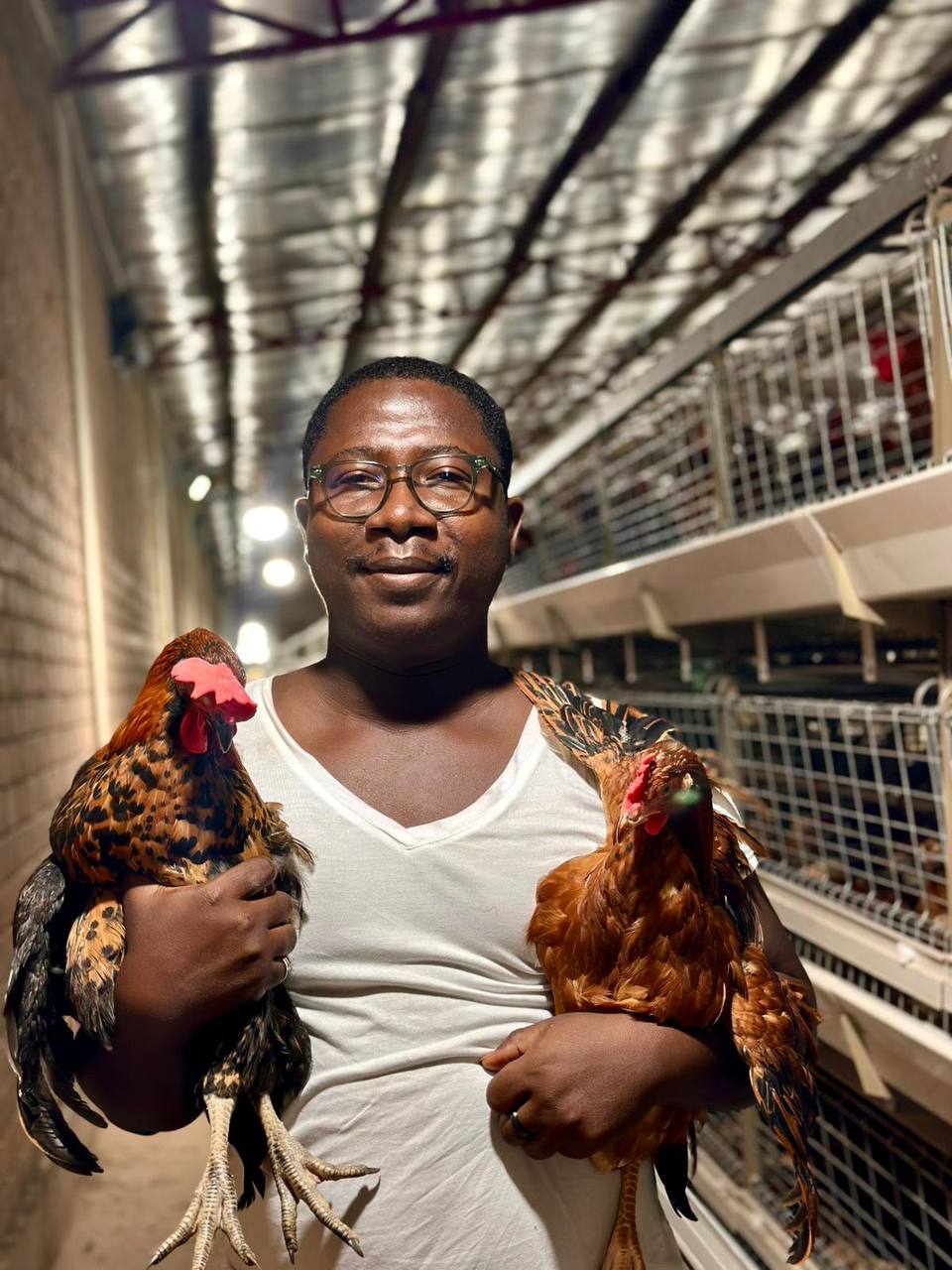
Ghanaian poultry farmer Adu Ababio has shared how he built a 22,000-bird poultry enterprise from humble beginnings after initially viewing farming as a form of punishment.
Mr Ababio, Chief Executive Officer of Eadu Tanta Farms and Training Center in Kumasi, said his journey into agriculture was driven by his childhood fascination with animals and the encouragement of his mother.
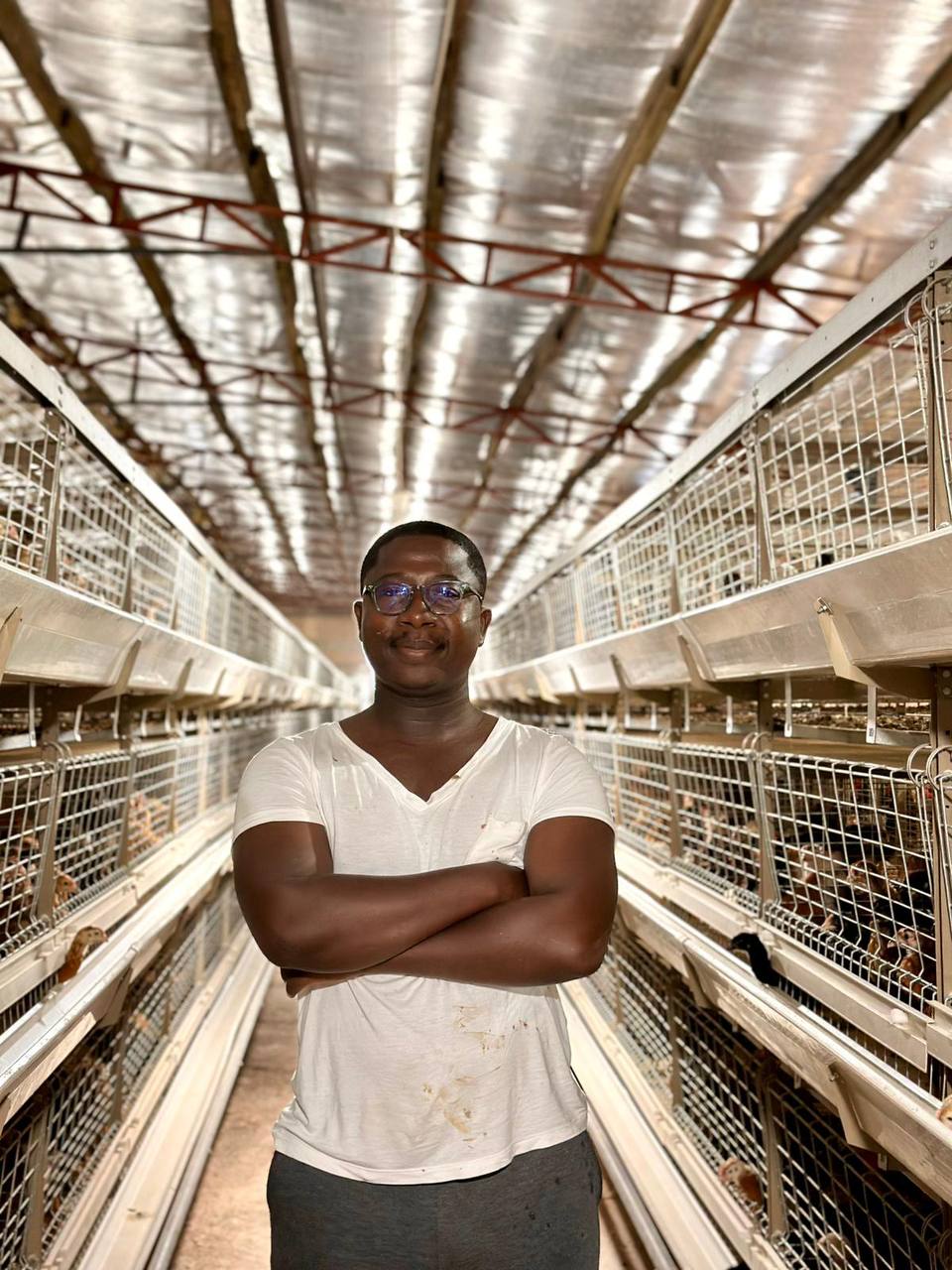
He established Eadu Tanta Farms in 2019 and has since expanded the operation to about 22,000 birds, comprising layers and broilers. He has also trained and supported the establishment of more than 200 farms in Ghana and beyond.
According to Mr Ababio, farming was not part of his original career plans. Growing up in Abetifi-Kwahu, he associated farming with hardship and dreamed instead of becoming a bank manager.
However, his strong interest in animals from the age of seven eventually changed his career path.
He said his mother recognised his natural ability with animals and encouraged him to pursue agriculture. He later studied Agricultural Science at the Kwame Nkrumah University of Science and Technology (KNUST), where he began to understand how his childhood interest could become a profession.
Mr Ababio said establishing his farm was challenging, particularly because he lacked sufficient capital.
At one point, he struggled to afford feed for his birds, forcing his wife to sacrifice her monthly National Service allowance to help keep the business running.
Despite the difficulties, the farm continued to grow, eventually reaching its current 22,000-bird capacity.
For Mr Ababio, one of the biggest lessons from his journey is that knowledge and determination can be valuable forms of capital.
“When you see yourself as the capital, you focus on becoming more valuable every day,” he said, explaining how training, mentorship and continuous learning helped him overcome financial limitations.
Mr Ababio identified the high cost of poultry feed as one of the biggest challenges facing farmers in Ghana.
He said feed accounts for about 65 to 70 percent of total production costs, while labour and disease outbreaks also pose significant challenges.
He stressed the importance of biosecurity and timely vaccination to prevent diseases such as Newcastle Disease, Infectious Bronchitis, Coccidiosis and Fowl Cholera.
He also urged young people interested in poultry farming to start small, gain practical experience and invest in training before expanding their operations.
He recommended starting with between 300 and 700 birds while developing proper management, record-keeping and disease-control systems.
Mr Ababio further called for stronger support for Ghana’s poultry industry, particularly through investment in local feed production, agricultural financing, veterinary services and stronger market connections.
He expressed concern about the continued importation of frozen chicken, saying it undermines local poultry farmers.
Looking ahead, he wants to train thousands of farmers across Ghana and West Africa, while expanding into integrated farming and value-added poultry products.
His ultimate goal, he said, is to help young Ghanaians see agriculture not as a last resort, but as a viable and profitable career.